Two months after the Pentagon’s PURSUE portal opened without a single record from the Department of Energy or the Central Intelligence Agency, both agencies are in the file set. The third and fourth PURSUE tranches, released June 12 and July 10, 2026, contain the first DOE and CIA UAP files the program has produced. The documents are new and the counts are real. What they hold is the question that matters, because the material these two agencies chose to release sits entirely on one side of a line that has organized the classification of nuclear-adjacent information for seventy years.
In May, this publication documented why the two agencies had not shown up: the Department of Defense had released its observational files while the Department of Energy and the CIA stayed out of the portal entirely. That absence has now partially closed. The pattern beneath it has not.
What the DOE and CIA UAP Files Actually Contain
The third tranche, published June 12, added 72 files and leaned heavily on the CIA and the FBI. Its CIA material runs historical: roughly eighteen records reaching back to the Agency’s involvement in the 1953 Robertson Panel, the body convened to assess whether sighting reports posed a national-security problem. Alongside them sit the FBI’s Colorado Springs file from 2022, a Northeastern orb-sighting series with reports continuing into 2026, NASA Gemini-program debriefings, and a first-person record of the October 2023 multi-agent event at a sensitive Western site that AARO has called among the most compelling in its holdings.
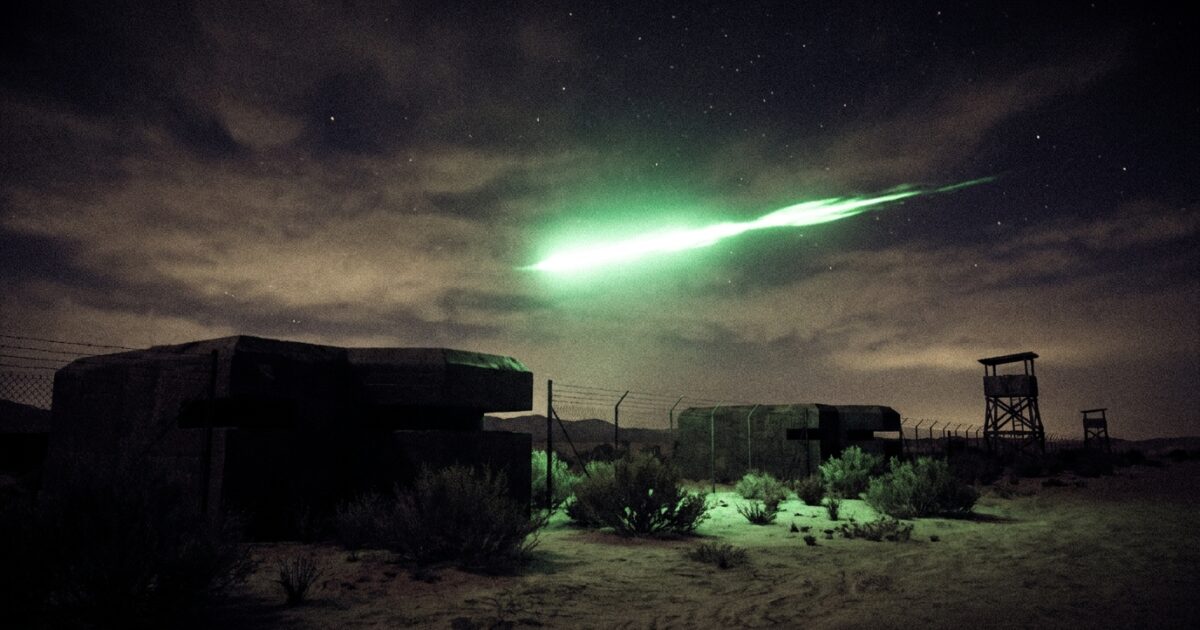
The fourth tranche, published July 10, added 40 files and named the Department of Energy for the first time. The DOE contribution is a single incident report: an unidentified object over the Pantex Plant near Amarillo, Texas, on September 1, 2015, which prompted a temporary lockdown and a response by two security officers. The same tranche carried a 1949 conference at Los Alamos, where physicists who had worked on the Manhattan Project, Edward Teller among them, failed to agree on what the green fireballs appearing over New Mexico’s nuclear sites were. The CIA material in the fourth release is again analytical: a set of 1955 sighting assessments and a 1973 intelligence report on Soviet missile systems that notes an unidentified aerial object in passing. Project Sign from 1948, a review of Project Blue Book, NASA Apollo and Skylab transcripts, and State Department cables round out the release.
Historical Sightings, Not Retrieval Records
Every DOE and CIA document across the two tranches falls into one of three categories: an observation, an analysis of an observation, or an administrative record of a security event. The Robertson Panel was a review board. Project Sign was an evaluation of sighting reports. The Los Alamos conference was a disagreement among scientists. The Pantex file is a guard-force incident report. None of it is a retrieval record, a material analysis, or a reverse-engineering document.
That distinction is the whole point. The May analysis, drawing on David Grusch’s sworn testimony and the Intelligence Community Inspector General’s finding that his complaint was credible and urgent, placed the retrieval and reverse-engineering material with these two agencies. That claim remains where it was: asserted by a named witness under oath, corroborated in structure by paper trails and career histories, and unconfirmed by any released document. The new files neither confirm it nor touch it. They occupy the adjacent territory instead.
The Nuclear-Facility Firewall
The DOE records cluster in one place: nuclear facilities. Pantex assembles and disassembles the American nuclear stockpile. Los Alamos designed the first weapons. The green fireballs of the late 1940s were tracked precisely because they appeared over nuclear installations. That clustering is not incidental, and it is not disclosure of the core question. It traces the edge of a firewall.
The Atomic Energy Act of 1954 governs a category the statute calls Restricted Data, the only information in American law that is classified from the moment it exists rather than by an official’s decision. A security report describing an object seen over Pantex is not Restricted Data, so it can be reviewed and released. A document describing the composition, structure, or engineering of recovered material would be Restricted Data, or the related category of transclassified foreign nuclear information, and it would stay classified by operation of the statute regardless of any executive order directing disclosure. The DOE and CIA UAP files released so far sit entirely on the releasable side of that line. Nothing on the other side has moved.
Presence Is Not Disclosure
The appearance of both agencies in the portal reads as participation. The structural tell is what is still absent. No released file overrides the Atomic Energy Act. No document is a retrieval or reverse-engineering record. The UAP Disclosure Act, which would create an independent review board with declassification authority and eminent-domain power over recovered material, has not passed; its 2025 version remains a floor amendment to the defense authorization bill. AARO, which received the case files, still cannot reach the compartmented programs it is nominally tasked to resolve, the contradiction this publication documented separately.
The record structure reinforces the point. The statutory National Archives collection created to preserve this material, Record Group 615, lists transfers from seven agencies as of publication, and the Department of Energy and the CIA are not among them. Their files have entered the executive branch’s curated portal, not the independent collection with a review mandate. Program insiders are managing an orderly exit from decades of compartmentation, releasing the layer that carries no legal or personal consequence while the layer that would carry both stays where it was. A 1949 conference memo and a 2015 guard report cost nothing to make public. The records Grusch described would cost a great deal, and none of them are here.
The DOE and CIA UAP files answer a narrow question: whether the two agencies held any releasable UAP records at all. They did. They leave the larger question precisely where the May analysis left it. What would move a retrieval or reverse-engineering record into a release is not another tranche of historical sightings. It is a statute that overrides the Atomic Energy Act for this category of material and a body with the authority to reach compartmented programs. Neither exists yet. Until one does, each release can be genuine and bounded at the same time, and the boundary will keep falling in the same place.
Credible evidence and testimony indicates that Federal Government unidentified anomalous phenomena records exist that have not been declassified or subject to mandatory declassification review due in part to exemptions under the Atomic Energy Act of 1954.
— UAP Disclosure Act of 2025, Congressional Findings
Sources & Further Reading
- Pentagon PURSUE UAP Disclosure Portal (Presidential Unsealing and Reporting System for UAP Encounters)
- National Archives — Record Group 615: Unidentified Anomalous Phenomena Records Collection
- Congress.gov — UAP Disclosure Act of 2025 (S.Amdt.3111 to S.2296)
- Rep. Eric Burlison — UAP Disclosure Act of 2025, NDAA amendment
- DefenseScoop — UAP disclosure legislation and congressional hearings
Leave a Reply