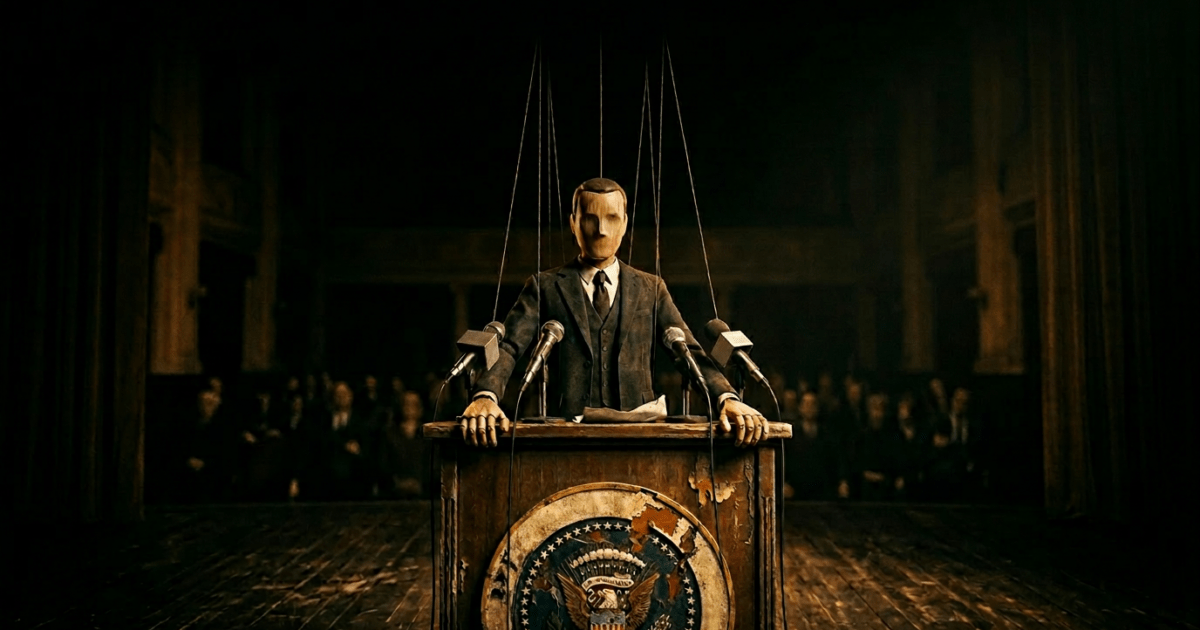
Dan Farah’s The Age of Disclosure became the highest-grossing documentary in Amazon Prime Video history within 48 hours of its November 2025 release. It features 34 current and former U.S. government, military, and intelligence officials stating on camera that non-human intelligent life exists, that the United States has recovered technology of non-human origin, and that these facts have been concealed from Congress and the public for eighty years. In an April 2026 interview on the Danny Jones Podcast, Farah described how the film came together — and in doing so, mapped the architecture of a UAP disclosure process that looks less like transparency and more like a managed transition designed to protect the people doing the disclosing.
The information in the documentary may be accurate. Much of it is consistent with the congressional testimony, declassified documents, and investigative reporting that preceded it. The question is not whether these officials are telling the truth. The question is why they are telling it now, in this format, through these channels, on these terms — and what those terms are designed to protect.
The Film Was the Plan
Farah is transparent about the process, even if he does not characterize it the way an outside observer might. He describes forming relationships with senior intelligence officials who were in the process of retiring from government. Those officials introduced him to colleagues. Those colleagues introduced him to Senate Intelligence Committee staff. The staff — who, as Farah notes, remain on the committee for years while senators rotate through — vetted his interview subjects, steered him away from some, and guided him toward others.
In Farah’s own words: “There was this moment in time where while I was putting together the documentary, my film essentially became the plan for disclosure for those who had the knowledge.” He describes a group of military, government, and intelligence officials who “decided my film would be the vehicle for disclosing that information.” The Senate Intelligence Committee staff was “essentially told to help make sure that this doc is the definitive doc” and to ensure Farah did not “end up interviewing the wrong person” or “misunderstanding the lay of the land.”
This is not a filmmaker gaining access to reluctant sources. This is a filmmaker being adopted as the delivery mechanism for a coordinated information campaign by one faction of the national security state. Farah frames this as validation. It is also, by definition, curation.
The Participants Are the Producers
Jay Stratton — former director of the UAP Task Force, co-founder of the Office of Anomalous Phenomena (the precursor to AATIP), sixteen-year veteran of the government’s UAP investigation apparatus — is not merely an interview subject in The Age of Disclosure. He is listed as an executive producer. So is Luis Elizondo, the former AATIP program manager whose 2017 departure and subsequent media campaign initiated the current disclosure cycle. Farah also holds the rights to produce any television or film adaptation of Stratton’s forthcoming memoir, to be published by William Morrow, a HarperCollins imprint.
Hal Puthoff, who directed the Stargate remote viewing program, served as chief scientist for AAWSAP, and has held clearances across multiple compartmented programs for decades, appears on camera providing the film’s scientific framework. Eric Davis, astrophysicist with deep ties to defense intelligence research through EarthTech International and the AAWSAP program, provides corroborating testimony. Jim Semivan, a senior CIA official, describes on camera how the legacy program created cultural stigma around UAP as a deliberate security measure.
These are not whistleblowers in any meaningful sense of the term. Whistleblowers act against institutional interests at personal cost. These are program alumni who spent decades inside the classification architecture, who are now disclosing selected information through channels they control, with book deals and production credits attached. The personal cost they face is not prosecution — it is irrelevance. Disclosure, structured this way, ensures they remain central to the narrative.
The Legal Exposure Is Real
If what these officials are saying is true — and they are emphatic that it is — then the programs they describe are illegal. Not ambiguously illegal. Not technically illegal. Constitutionally illegal.
David Grusch testified under oath that funds appropriated by Congress for specific purposes were redirected to UAP-related programs without congressional knowledge or authorization. Farah’s sources confirm this. He states in the interview that “there’s been a misappropriation of funds” and that “money that’s supposed to go to one thing actually goes to this.” Multiple officials in the documentary describe programs that have operated outside congressional oversight since the 1940s — programs funded with taxpayer money, managed by defense contractors, and concealed from elected officials with the constitutional authority to oversee them.
The Schumer-Rounds UAP Disclosure Act — introduced in 2023, reintroduced in 2024, and again in 2025 — includes eminent domain provisions specifically designed to recover “technologies of unknown origin and biological evidence of non-human intelligence” from private entities. The legislation presumes the existence of contractor-held material acquired through government programs. That provision has been stripped from every version that actually passed, most recently gutted in the House by members whose districts include significant aerospace contractor presence.
If these programs have existed for eighty years, as the documentary’s participants unanimously assert, then everyone who participated in them — including the officials now coming forward — was party to a sustained violation of the constitutional appropriations process. The scale of the misappropriation, if the claims are accurate, would dwarf any financial scandal in American history. The institutional deception of Congress would constitute a structural assault on civilian oversight of the military and intelligence apparatus.
No one in The Age of Disclosure calls for criminal prosecution of the programs they describe. No one calls for prosecution of the people who ran them. No one calls for prosecution of themselves.
What the Managed Version Looks Like
The version of disclosure emerging through Farah’s film and its surrounding ecosystem has specific characteristics. It names the institutional architecture — CIA as quarterback, Air Force for operations, defense contractors for reverse engineering, Department of Energy for classification cover. It confirms the existence of recovered materials. It frames the cover-up as understandable given the security dynamics of the Cold War and the technology race with adversaries. It positions the disclosure faction — Stratton, Elizondo, Puthoff, Davis, Mellon, the congressional allies — as heroes who fought the system from within.
What it does not do is hold anyone accountable. The cover-up is described as the work of “career bureaucrats” and unnamed gatekeepers. The head of CIA Science and Technology — identified by Stratton as the key gatekeeper — is referenced but not named. The defense contractors are mentioned generically. The specific mechanisms of fund diversion are described in general terms but not documented. The eighty-year violation of congressional authority is framed as a complicated situation in which well-meaning people made difficult choices, not as a crime requiring investigation.
Farah says it explicitly: “I don’t think that any of these people are villains. I really don’t. I just think it’s a complicated situation and there’s no easy answer.” This framing — understandable decisions by reasonable people in impossible circumstances — is the precise framing you would construct if your goal were to disclose the existence of illegal programs while ensuring that no one involved in those programs faces legal consequences.
The Bennewitz Mirror
In the interview, Farah and his host discuss the Paul Bennewitz affair — the documented case in which Air Force and NSA personnel fed disinformation to a civilian researcher near Kirtland Air Force Base, driving him to a mental breakdown, as a counterintelligence measure against Soviet penetration of the UFO community. Farah acknowledges this happened. He then adds something remarkable: he has been told by his “most senior relationships” that “a couple of the people who have come out in a big way in the public” to share what they learned were themselves given staged experiences — real events performed for them as part of counterintelligence operations against foreign adversaries.
The mechanism he describes — curated access to real-seeming events, provided by institutional actors to selected recipients for strategic purposes — is the same mechanism being used on him. The only structural difference is that the Bennewitz operation was designed to suppress public interest, while the current operation appears designed to cultivate it. In both cases, the intelligence community selects the recipient, controls the information flow, and shapes the narrative to serve institutional objectives. Farah trusts his curators because they have impressive credentials and a lot to lose. Bennewitz trusted his for similar reasons.
This is not an argument that Farah is being deceived. It is an observation that the pattern he correctly identifies in historical cases — intelligence operatives using civilian channels to advance institutional agendas — is the same pattern his own project embodies. He recognizes it when it was done to someone else. He does not recognize it when it is being done through him.
What Disclosure Without Accountability Produces
The current trajectory leads somewhere specific. The base facts become publicly accepted: non-human technology exists, the government has recovered it, and there has been a cover-up. The officials who managed the transition from secrecy to disclosure are positioned as public servants who did the right thing. Book deals are signed. Documentaries are produced. Memoirs are published by major imprints. The technology race narrative provides a national security justification for continued classification of operational details. The legacy program participants retire with pensions, clearances, and consulting contracts intact.
What does not happen is an investigation into who authorized the diversion of taxpayer funds. What does not happen is a congressional inquiry with subpoena power into the specific contractors holding recovered materials. What does not happen is prosecution under existing statutes for the misappropriation Grusch described under oath. The structural catch-22 of AARO — an investigative body placed inside the organization it is supposed to investigate — remains in place. The Schumer-Rounds eminent domain provision remains stripped from every version of the legislation that actually becomes law.
Disclosure without accountability is not transparency. It is a controlled detonation of information that has become too dangerous to keep contained — detonated on a schedule, through channels, and in a framing that protects the people who kept it contained for eighty years.
The Position
None of this requires the information in The Age of Disclosure to be false. It requires recognizing that truth and strategy are not mutually exclusive. An intelligence official can be telling the truth about what he witnessed and simultaneously managing the terms under which his involvement in an illegal program becomes public knowledge. A senator can be genuinely outraged by the cover-up and simultaneously participating in a disclosure process that ensures no one with political power is held responsible for it. A filmmaker can be acting in good faith and simultaneously serving as the delivery mechanism for an information campaign he did not design.
The question for the public is not whether disclosure is happening. It is happening. The question is who benefits from this specific version of it, who is protected by this specific framing, and what the one thing is that none of the 34 officials in the highest-grossing documentary on Amazon Prime Video are calling for.
They are not calling for anyone to go to prison.
That is the tell.
“There was this moment in time where while I was putting together the documentary, my film essentially became the plan for disclosure for those who had the knowledge.” — Dan Farah, Danny Jones Podcast, April 2026
Sources & Further Reading
- Danny Jones Podcast — Dan Farah Interview (April 2026)
- Wikipedia — The Age of Disclosure (documentary)
- U.S. Congress — UAP Disclosure Act of 2025 (Schumer-Rounds-Gillibrand Amendment)
- Inside Government Contracts — Implications of the UAP Amendment in the 2024 NDAA
- Fortune — Trump Says Pentagon Will Release “Very Interesting” UFO Files (May 2026)
Leave a Reply