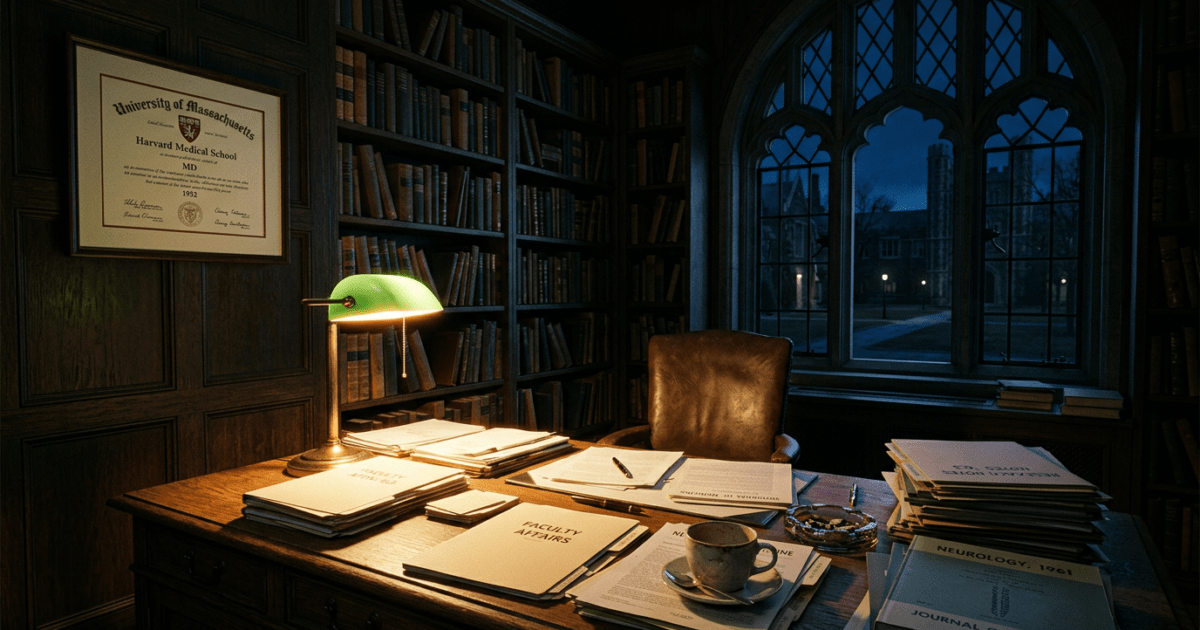
On August 3, 1962, at the Lincoln Park Zoo in Oklahoma City, psychiatrist Louis Jolyon West and two collaborators injected an Indian elephant named Tusko with 297 milligrams of LSD. Tusko was eleven years old and weighed approximately 7,000 pounds. The dose was, in the published recollection of the lead researcher, “approximately 1,435 times the quantity one would give to a human to produce for several hours a marked mental disturbance.” It remains, sixty-four years later, the largest single dose of LSD ever administered to a living being.
Tusko began swaying within seconds. His hindquarters buckled. He collapsed on his right side, defecated, went into status epilepticus, and stopped breathing. The researchers attempted to revive him with phenothiazine. He was dead within an hour and forty minutes.
West was, at the time, chairman of the Department of Psychiatry at the University of Oklahoma College of Medicine. He had received the appointment at age twenty-nine, the youngest full professor in the department’s history. He went on to chair the Department of Psychiatry at UCLA from 1969 to 1989. He was the recipient of the Benjamin Rush Gold Medal Award from the American Psychiatric Association in 1973. He testified at the trials of Patty Hearst, Sirhan Sirhan, and Timothy McVeigh. He examined Jack Ruby in his Dallas jail cell in 1964 and emerged to declare Ruby psychotic, eleven days before Ruby was scheduled to testify before the Warren Commission.
He was, simultaneously, an MKULTRA contractor under Subproject 43, corresponding with Sidney Gottlieb under the pseudonym Sherman R. Grifford. He proposed in 1973 to establish a federal Center for the Study and Reduction of Violence at UCLA that would have used psychosurgery and chemical interventions on individuals identified through behavioral data analysis as predisposed to violent behavior, with the deployment focused on what he and his collaborators described in writing as “selected components of the population.” The proposal was endorsed by Governor Ronald Reagan in his 1973 State of the State address. It was defeated by activist opposition, which West described as the most frustrating experience of his career.
The other named perpetrators in this sequence operated within institutional bounds, however ethically compromised. Cameron destroyed his patients while believing he was treating them. Isbell experimented on prisoners under a captive-population research model that, while horrific, occupied a recognized ethical category. White ran safehouses where unwitting subjects were dosed and surveilled. Louis Jolyon West did all of those things and additionally moved through the political and judicial systems of the United States as a legitimating expert witness on the very forms of mind control he was secretly funded to develop. He is the figure the program produced who most fully exemplifies the credentialed academic as intelligence asset.
The Career
Louis Jolyon West was born in Brooklyn on October 6, 1924, and grew up in Madison, Wisconsin. He enlisted in the Army in 1942 hoping for combat assignment but was sent instead to the State University of Iowa for medical training under the Army Specialized Training Program. He graduated medical school in 1948, completed his psychiatric residency at Cornell University Medical College — an MKULTRA institution housing the Society for the Investigation of Human Ecology — and entered Air Force service.
His first significant work was at Lackland Air Force Base in San Antonio, where as Chief of Psychiatry Service he examined American prisoners of war returning from Korean captivity. The military was concerned that the captured Americans had been subjected to Chinese and North Korean “brainwashing” — a term that entered the American vocabulary specifically through this period. West’s evaluations supported the brainwashing thesis. He produced research arguing that coerced confessions extracted from American prisoners reflected the coercion rather than the prisoners’ actual disloyalty. The work positioned him, by his late twenties, as the federal government’s leading expert on the techniques the Korean adversaries had allegedly used.
The work also positioned him for recruitment. Sidney Gottlieb, in 1956, brought West into MKULTRA as a subcontractor under Subproject 43. The funding was $20,800. The proposal was titled “Psychophysiological Studies of Hypnosis and Suggestibility,” with an accompanying document titled “Studies of Dissociative States.” West’s stated research goal was to develop techniques for inducing dissociation through combinations of hypnosis, sensory deprivation, and pharmacological agents — research that mapped exactly onto the techniques he had publicly attributed to the Chinese in his prisoner-of-war analyses.
The structural irony is sharp. The American expert who had publicly characterized Korean brainwashing as a totalitarian atrocity was, simultaneously and under contract, working to develop equivalent capabilities for the U.S. intelligence community. The two activities were not in tension within his institutional position. They reinforced each other. The expertise on the threat justified the funding for the development. The development produced the expertise.
The Tusko Experiment
By 1962, West had been at the University of Oklahoma for eight years, advancing rapidly through the academic ranks. He was thirty-seven. The Tusko experiment was conducted with two collaborators: Chester M. Pierce, a Black psychiatrist who would later become a prominent academic at Harvard Medical School, and Warren Thomas, the director of the Lincoln Park Zoo. The stated objective was to investigate musth — a periodic condition in male elephants involving testosterone surges, aggressive behavior, and temporal gland secretions. West hypothesized that LSD might induce a state resembling musth and provide a pharmacological model for the condition.
The dose calculation was the proximate cause of Tusko’s death. West and his colleagues scaled the dose to body weight, using the standard pharmacological formula of milligrams per kilogram of subject mass. They did not adjust for brain weight, metabolic rate, or species-specific neural sensitivity to the compound. The 297-milligram injection was administered by dart gun into Tusko’s right buttock at 8:00 a.m. The elephant was in cardiac arrest by 8:25.
The 1962 paper West published on the experiment was, by his standards, mild in its self-criticism. He characterized the death as an unfortunate outcome that did not invalidate the research direction. He continued to argue that the LSD-induced state had elements consistent with naturally occurring musth, despite Tusko’s failure to survive the experiment long enough to establish whether such a state would have developed.
The experiment was repeated in 1984 by Ronald K. Siegel of UCLA — West’s institutional successor — using two elephants and equivalent doses delivered in drinking water rather than by injection. Both elephants survived. Both behaved unusually for several hours. Siegel’s published interpretation was that the 1962 Tusko death had been caused not by the LSD but by the phenothiazine West had administered in the failed attempt to revive him. The most defensible reading of the available evidence is that West killed Tusko twice — first by the dose calculation error, then by the inappropriate revival protocol.
The Tusko experiment is the cited reference point in West’s career because it is the most documented public failure he produced. It is not the most damaging element of his record. It is the element that mainstream institutional history has chosen to remember, in part because it concerns an animal rather than a person.
Jack Ruby
On November 24, 1963, Jack Ruby walked into the basement of the Dallas Police Department headquarters and shot Lee Harvey Oswald in the abdomen at close range while Oswald was being transferred to the county jail. Oswald died ninety minutes later at Parkland Memorial Hospital. He had been the only suspect in custody for the assassination of President John F. Kennedy two days earlier. Ruby’s act eliminated the possibility of testimony that would have shaped the historical record of the assassination.
On April 26, 1964, Louis Jolyon West conducted a psychiatric examination of Jack Ruby in his isolation cell at the Dallas County Jail. The examination occurred the day after Ruby attempted suicide by repeatedly banging his head against the walls of his cell. West was at the time chairman of psychiatry at the University of Oklahoma. He had no prior treatment relationship with Ruby. He had been engaged by Ruby’s defense team — though the path by which his name reached the defense team has not been definitively documented in the public record.
West’s examination produced a five-page report concluding that Ruby was suffering from “acute psychosis, a paranoid state, and suicidal tendencies.” West described Ruby as believing that Jewish people outside the cell were being massacred in retaliation for his actions, and that the federal government was complicit in the killings. West recommended Ruby’s transfer to a mental facility for further evaluation. The examination took place eleven days before Ruby was scheduled to testify to the Warren Commission.
The contemporaneous record establishes that Ruby’s mental state had visibly deteriorated by the time of West’s examination. Ruby’s defense attorney Phil Burleson, in a Sixth Floor Museum oral history shortly before his death, described Ruby’s pre-existing paranoid delusions about Jewish massacre at the time of West’s visit. The deterioration is documented. The question that the surviving records do not fully answer is whether the deterioration was endogenous, or whether something — chemical, psychological, or coercive — had been introduced by West or by others into Ruby’s environment in the weeks preceding the examination.
What the post-2017 declassified documents established is that West, while conducting the Ruby examination, was simultaneously preparing a 1956 MKULTRA proposal extension that requested $35,995 in continued funding for hypnosis and suggestibility research, with a stated research duration extending through 1966-67. The Ruby examination occurred within the active window of West’s continued MKULTRA work. His report on Ruby specifically mentioned hypnosis and intravenous sodium pentothal as potential techniques for further evaluation. Sodium pentothal was the same compound he was being funded to study under his MKULTRA subproject.
Ruby died on January 3, 1967, in Parkland Memorial Hospital, of pulmonary embolism complicated by lung cancer. He had spent the final year of his life claiming that he had been injected with cancer-causing biological material by his captors. The claim was dismissed in the contemporaneous press coverage as further evidence of his psychosis. Ruby had been West’s patient. Whatever the contents of the conversations that took place in the cell on April 26, 1964, the record of them remains, in West’s report, the version produced by an MKULTRA contractor with active CIA funding for research into pharmacologically induced personality change.
Haight-Ashbury
In 1966-67, West was on sabbatical from the University of Oklahoma at the Center for Advanced Study in the Behavioral Sciences in Stanford. The Summer of Love was beginning. The Haight-Ashbury district of San Francisco was the visible center of the American counterculture, a neighborhood saturated with LSD whose users were disproportionately young, white, runaway teenagers. The CIA, having stockpiled the world’s supply of LSD through Sidney Gottlieb’s 1953 procurement and having spent the intervening fourteen years studying its effects in safehouses and clinics, had a substantial institutional interest in understanding how the drug was operating in an uncontrolled population.
West rented a Victorian house at 638 Frederick Street, three blocks from the corner of Haight and Ashbury. He furnished the house in a manner consistent with the surrounding scene. He posted invitations to neighborhood youth offering free meals, free crash space, and the opportunity to “rap” with sympathetic adult researchers. He described the operation, in his subsequent academic writing and in personal correspondence later released through UCLA’s archive of his papers, as a “laboratory disguised as a hippie crash pad.”
The research output West produced from the Haight-Ashbury operation was modest. He published several papers on hippie subculture, drug use, and the social organization of countercultural communities. The papers are unremarkable academic work. What the operation actually produced — what was observed, what was administered to whom, what was reported back to the institutional sponsors — has never been fully documented. The Frederick Street house was operational during the same period that Charles Manson and his early followers were active in the same neighborhood, frequenting the Haight-Ashbury Free Medical Clinic that West’s operation maintained close contact with.
The journalist Tom O’Neill, in his 2019 book Chaos: Charles Manson, the CIA, and the Secret History of the Sixties, documents the parallel presence and the institutional connections between West’s research apparatus and the social network that produced the Manson Family. O’Neill’s central argument — that West’s MKULTRA-adjacent work in San Francisco contributed to the conditions that enabled the Tate-LaBianca murders in 1969 — is contested. The structural facts that O’Neill establishes are not contested: West was operating in Haight-Ashbury during the relevant period; his research had MKULTRA institutional sponsorship; the Free Medical Clinic that served the Manson Family was within his observational network; and the CIA’s interest in studying behavior modification under conditions of drug use, social isolation, and charismatic group leadership mapped precisely onto the social dynamics that produced the Family.
Whether West’s operation was studying the Manson dynamic, contributing to it, or merely co-located with it is the question O’Neill’s book leaves open. The records that would resolve the question are, like the rest of the program’s operational documentation, in the boxes Sidney Gottlieb watched burn in 1973.
The Violence Center
By 1969, West had moved to UCLA as chair of the Department of Psychiatry and director of the UCLA Neuropsychiatric Institute. The positions were among the most powerful in American academic psychiatry. He held them for the next twenty years.
The Center for the Study and Reduction of Violence proposal was developed beginning in 1969 and reached funding readiness in 1972. The proposed center had received financial commitments from the California State Department of Mental Hygiene and the California Council on Criminal Justice. Federal and private foundation grants were anticipated. Governor Ronald Reagan endorsed the proposal in his 1973 State of the State address.
The proposal’s stated objective was to “gather unprecedented amounts of behavioral data and centrally store it to identify emergent crime.” The methodology, as described in the planning documents that circulated in 1972 and 1973, included psychosurgery — surgical lesioning of the amygdala and other limbic structures associated with aggressive behavior — chemical interventions, and what the documents described as “predictive policing” applications targeting individuals identified through behavioral data analysis as predisposed to future violence.
The activist opposition that defeated the proposal — led by Students for a Democratic Society, the American Civil Liberties Union, and a coalition of Black, Chicano, and Native American community organizations — focused specifically on the racial implications of the predictive policing framework. The deployment populations identified in the planning documents were, in the language West himself used in published correspondence, “selected components of the population.” The phrase, in the context of the proposal’s funding pipeline through criminal justice agencies, was understood by the opposition to mean what it meant: minority communities.
The proposal was withdrawn in late 1973. The activist victory was significant. It also did not undo the underlying institutional position. West remained chair of UCLA Psychiatry for sixteen more years. The research apparatus he had built was redirected into other projects. The infrastructure of behavioral surveillance and pharmacological intervention that the Violence Center would have institutionalized has, in the decades since, been built incrementally through other channels — predictive policing software, school-based mental health screening, criminal justice-adjacent psychiatric assessment — without the centralized administrative structure West had proposed and without the activist attention that defeated his version.
The 1973 victory was a victory against a single institutional embodiment of a research program. The research program continued. It continues today.
The Other Cases
West examined Patricia Hearst in 1974 after her capture from the Symbionese Liberation Army. He concluded that she had been brainwashed. His testimony was a major component of her unsuccessful defense at the bank robbery trial. Hearst, in her later memoir, described her first encounter with West as one of the most disturbing experiences of her detention. “He had a creepy hypnotic voice,” she wrote. “I suspected ‘Jolly’ of being too smooth, too soothing to be trusted.” She was, by her own description, broken under his examination — “I simply crumbled under his scrutiny” — within minutes of meeting him.
West examined Sirhan Sirhan after the 1968 Robert Kennedy assassination. He found Sirhan to be a candidate for hypnotically induced action — a Manchurian Candidate scenario consistent with the research direction West had been funded to pursue under MKULTRA. The defense did not advance this theory at trial. The defense did not adequately understand, at the time, what West’s institutional position actually was.
West examined Timothy McVeigh after the 1995 Oklahoma City bombing. He visited McVeigh in prison seventeen times. His evaluations of McVeigh have not been fully released. McVeigh was executed in 2001. The contents of those seventeen visits remain, like much of West’s career, partially classified or institutionally inaccessible.
The pattern is consistent. When American history produced a defendant whose mental state would shape the public understanding of a politically significant event — Ruby on the Kennedy assassination, Hearst on the radical underground, Sirhan on the second Kennedy assassination, McVeigh on domestic right-wing terrorism — Louis Jolyon West, MKULTRA contractor, holder of the highest credentials in American academic psychiatry, was the man who arrived to conduct the evaluation.
The probability of this concentration of cases in a single career, by chance, is low. The probability that the concentration reflects the operating preferences of the institutions that selected expert witnesses is high. The probability that the institutions selecting West did so without awareness of his MKULTRA history is, in the cases where the selections occurred after 1977 — the date of the Senate hearings that publicly identified him — effectively zero.
The Question Of What He Was
Louis Jolyon West died on January 2, 1999, in Los Angeles, age seventy-four. He was eulogized as a pioneer of American psychiatry, a defender of civil rights, a tireless advocate against the death penalty, and an expert on cult psychology. His papers were donated to the UCLA Library Special Collections. The papers fill twenty-five linear feet of shelf space. They include extensive correspondence with the CIA, MKULTRA proposals dated through the 1960s, the Ruby examination report, Haight-Ashbury operational notes, and the Violence Center planning documents.
The institutional position the records support is not that West was a fringe figure who happened to work for the CIA. The position the records support is that West was the credentialed psychiatric establishment, working in continuous coordination with the U.S. intelligence community, across forty years and three institutions, with operational involvement in many of the highest-profile psychiatric examinations of the second half of the twentieth century in the United States.
What the public record does not establish — because the operational records were destroyed — is what West was actually doing during the closed-door portions of his career. The Tusko experiment is documented because it took place at a public zoo. The Ruby examination is documented because it took place in a county jail with witnesses. The Frederick Street operation is documented because the neighborhood was the most photographed cultural scene in American history. The Violence Center is documented because the activist opposition produced its own paper trail.
What is not documented is what happened during the three-year fellowship at the Center for Advanced Study in the Behavioral Sciences when he was operating the Haight-Ashbury crash pad. What is not documented is what happened during the seventeen visits to McVeigh. What is not documented is what was contained in the written communications between West and Sherman R. Grifford — Sidney Gottlieb’s MKULTRA pseudonym — that did not survive the 1973 destruction.
The cases that are documented are sufficient to establish what kind of figure West was. The cases that are not documented are the cases the program was actually designed to produce. The named perpetrators in this sequence — Gottlieb, Cameron, Isbell, White — operated in environments where their work eventually became visible. Louis Jolyon West operated in environments where the work was, by design, never going to become fully visible. He was, more than any of the other named figures, the credentialed academic whose institutional position made the program operationally invisible.
That invisibility is the bridge to the next article. The man who succeeded West, in the structural sense — the man who took the methodology of MKULTRA out of the safehouses and the psychiatric facilities and into the world of consciousness research and classified physics — was not a credentialed psychiatrist. He was a Croatian-American Army captain commissioned at Edgewood Arsenal in 1953, the same year MKULTRA was formally authorized. His name was Andrija Puharich. He was the bridge between the chemistry shop and the parapsychology lab. The MKULTRA sequence ends with his story.
“He had a creepy hypnotic voice. A tall, heavy-set man who appeared to be kindly, I suspected ‘Jolly’ of being too smooth, too soothing to be trusted.” — Patricia Hearst, on her first encounter with Louis Jolyon West, from Every Secret Thing, 1982
Sources & Further Reading
- UCLA Library Special Collections — Louis Jolyon West Papers (Collection 590)
- MuckRock — “Jack Ruby’s psychosis was diagnosed by the same CIA doctor who killed an elephant with psychedelics” (December 2017)
- Sixth Floor Museum — Report of Psychiatric Examination of Jack Ruby by Louis Jolyon West (April 26, 1964)
- Louis Jolyon West — Comprehensive Biography
- The Intercept — “Inside the Archive of an LSD Researcher With Ties to the CIA’s MKUltra Mind Control Project” (November 2019)
- Tom O’Neill with Dan Piepenbring, Chaos: Charles Manson, the CIA, and the Secret History of the Sixties (Little, Brown, 2019)
- Patricia Hearst with Alvin Moscow, Every Secret Thing (Doubleday, 1982)
Leave a Reply