In November 1945, Allen Dulles sent a Scottish-born psychiatrist to Nuremberg to evaluate Rudolf Hess. The psychiatrist’s name was Donald Ewen Cameron. He was forty-three years old, the chairman of the Department of Psychiatry at McGill University, the director of the newly opened Allan Memorial Institute in Montreal, and a man who had spent the previous two years working informally for the Office of Strategic Services. Hess was Hitler’s deputy. Cameron’s job was to determine whether the man in the cell was mentally fit to stand trial.
Cameron diagnosed Hess with hysterical amnesia. The trial proceeded. Hess was convicted and sentenced to life imprisonment at Spandau, where he died in 1987. The Nuremberg Tribunal that Cameron’s evaluation enabled produced, among its other outputs, the Nuremberg Code: ten principles of medical ethics governing experimentation on human subjects. The first principle was the requirement of voluntary informed consent.
Twelve years later, Cameron began an experimental program at the Allan Memorial Institute that violated every principle of the code he had helped to establish. He did so with funding from the Central Intelligence Agency, with cover provided by a foundation he believed to be civilian, and with the unwitting participation of patients who had checked themselves in for postpartum depression, anxiety, and marital problems. He published his methodology in peer-reviewed journals throughout. He was, during the years he was destroying his patients, the president of the American Psychiatric Association, the Canadian Psychiatric Association, and the World Psychiatric Association — three credentials he held simultaneously.
This is the part of MKULTRA that mainstream coverage tends to soften. It should not be softened. Cameron is the most credentialed perpetrator the program produced and the one whose victims have the most documented evidence of what was done to them. The other named figures in this sequence operated in shadows. Cameron operated in print. The record of what he did is in his own published papers.
The Career
Donald Ewen Cameron was born in Bridge of Allan, Scotland, on December 24, 1901. He earned his medical degree from the University of Glasgow in 1924. He moved to Canada in 1929, working at the Brandon Mental Hospital in Manitoba before taking a research position at Worcester State Hospital in Massachusetts. He moved to the University at Albany in 1938, where he developed his early theoretical work on sensory deprivation and memory.
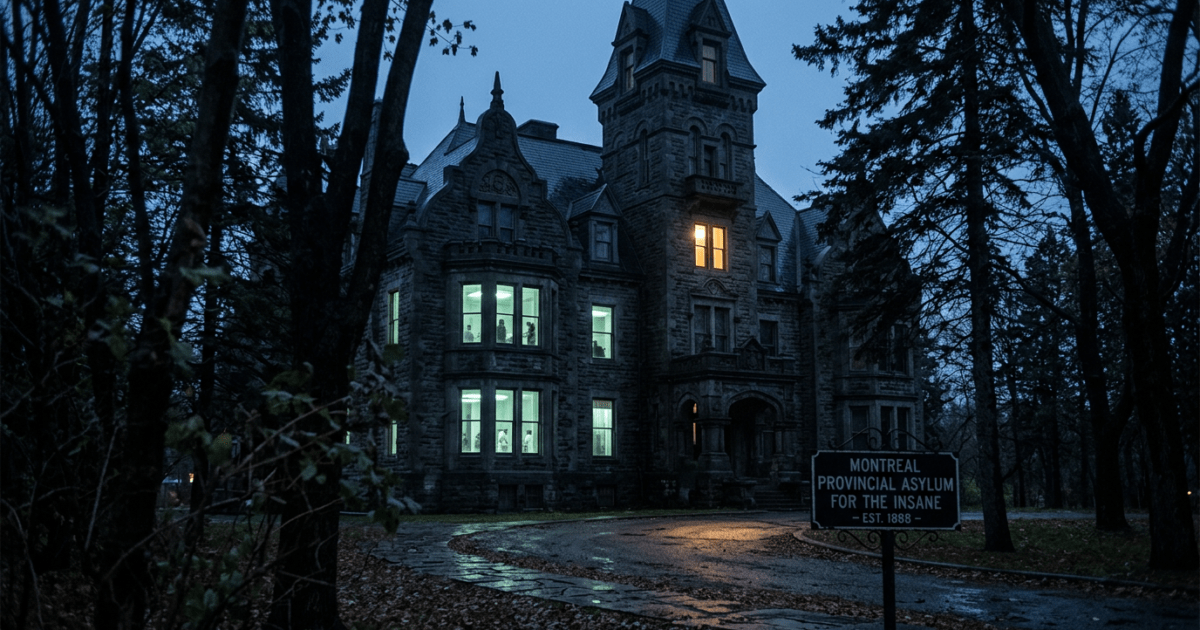
In 1943, the neurosurgeon Wilder Penfield recruited him to McGill. Cameron arrived in Montreal at thirty-eight and was given resources that would shape the rest of his career. The Allan Memorial Institute, established that year, was housed in Ravenscrag — a forty-eight-room mansion on the slope of Mount Royal that had belonged to the shipping magnate Sir Hugh Allan. Cameron ran it. McGill paid his salary. The Royal Victoria Hospital handled the medical accreditation. The institutional architecture gave him operational latitude that few psychiatrists in North America possessed.
By the early 1950s, Cameron held the chair in psychiatry at McGill, the directorship of the Allan Memorial, and a rising international profile. He was elected president of the American Psychiatric Association in 1952. He was the founding president of the World Psychiatric Association in 1961. He had presided over the establishment of the Canadian Psychiatric Association and served as its president as well. The American, Canadian, and world psychiatric establishments had, simultaneously, the same head of state.
That fact — that the experiments at Allan Memorial were conducted by the man who held the highest offices in his profession on three levels — is the structural feature of the case. Cameron was not a fringe practitioner. He was the establishment.
The Theory
Cameron’s theoretical work began before the CIA arrived. He believed, as a matter of clinical conviction, that mental illness was caused by patterns of pathological thought that had become entrenched in the patient’s neural architecture. The therapeutic implication, in his framework, was that those patterns could be erased — through sufficient disruption of the existing structure — and that healthier patterns could be installed in their place.
He called the erasure phase “depatterning.” He called the installation phase “psychic driving.” Together, the two stages constituted what he believed to be a revolutionary therapeutic technique that would transform the treatment of schizophrenia and severe psychiatric illness.
Depatterning was achieved through the combination of three modalities applied simultaneously. The first was prolonged drug-induced sleep, sometimes maintained for weeks at a time, using barbiturates, Sodium Amytal, and Thorazine. The second was intensive electroconvulsive therapy, administered using the Page-Russell technique — a multi-shock protocol in which the standard single ECT pulse was replaced with five or six pulses delivered in sequence within a single treatment session. Cameron applied this protocol two to three times daily over weeks. By the standards of the era’s ECT practice, his subjects received roughly thirty to forty times the cumulative exposure of conventional treatment. The third modality was sensory deprivation — confinement in soundproofed rooms with goggles obscuring vision, cardboard tubes over the arms, and minimal human contact, sometimes for periods exceeding two weeks.
The combination produced what Cameron in his published papers described as a state of total regression. Patients lost continence. They lost the ability to recognize their own families. They lost the ability to speak in complete sentences. They lost autobiographical memory. Some lost the ability to feed themselves. Cameron interpreted these states not as injuries but as the necessary clearing of the slate.
Psychic driving was the second phase. After depatterning, the patient was placed back into the soundproofed environment with a tape loop playing repetitive recorded messages — sometimes the patient’s own voice, sometimes the therapist’s — for sixteen to twenty hours per day, for periods of weeks. The messages were short directive statements, often beginning with “you” — “you wanted your mother to make you feel safe,” “you have hurt your husband,” “you are loved.” Cameron believed the repeated exposure, in the absence of competing stimuli, would install the messages as new structural elements of the rebuilt personality.
It did not work. Cameron published his results. The papers acknowledge that follow-up studies showed no improvement in the underlying conditions and substantial deterioration in patient functioning. He continued the program for more than a decade.
Subproject 68
In January 1957, Sidney Gottlieb authorized MKULTRA Subproject 68. The Society for the Investigation of Human Ecology — a CIA front organization run out of Cornell — became the conduit. Cameron received approximately $69,000 between 1957 and 1964 for what he believed to be civilian research funding to support his depatterning and psychic driving program.
The Cameron defense, which has appeared in subsequent academic literature and in his family’s public statements, holds that he did not know the funding came from the CIA. The available evidence supports this in part. Cameron does not appear to have been a witting participant in MKULTRA in the way that Harold Abramson or James Hamilton were. The CIA’s interest, channeled through the Human Ecology Fund, was structural: Cameron was already conducting the research the Agency wanted to study. The funding allowed the program to continue and expand. The research was already happening.
That qualification matters morally and legally. It does not change what Cameron did to his patients. The patients did not know they were being experimented on. They believed they were receiving treatment from the most credentialed psychiatrist in North America at the most prestigious psychiatric facility in Canada. The experimental status of the protocols was concealed from them by Cameron, regardless of who was funding the work. The Nuremberg Code violations are Cameron’s, with or without the CIA paper trail.
The Canadian government also funded the program, separately and openly, through Health and Welfare Canada. The Canadian funding has been the subject of decades of subsequent litigation and is the basis on which the Canadian government eventually paid limited compensation to surviving victims. The American funding became the basis on which the CIA settled its own portion of the resulting lawsuits.
The Patients
Velma Orlikow checked herself into the Allan Memorial in 1956 for postpartum depression following the birth of her daughter. Her husband David, later a Member of Parliament, drove her to Montreal from Winnipeg and signed the admission paperwork. She was thirty-eight. She expected supportive psychiatric care. She received fourteen months of depatterning and psychic driving. She emerged unable to read, unable to recognize her husband consistently, unable to take care of her children. She spent the rest of her life in fragmented recovery. She became one of the lead plaintiffs in the eventual lawsuit and gave testimony to the U.S. Senate Subcommittee on Health and Scientific Research in 1977.
Florence Langleben was admitted in 1956 for what was diagnosed as anxiety. She was a young mother. Cameron’s protocols rendered her unable to function as a parent. Her children grew up with a mother who could not remember their birthdays. She did not know what had been done to her until the program was publicly exposed nearly twenty years later.
Mary Morrow, a psychiatrist herself, was admitted in 1960 after a period of professional stress. She was placed under Cameron’s care. She emerged with permanent neurological damage that ended her psychiatric career. Her case is one of the most documented in the eventual litigation because she had the technical vocabulary to describe what had been done to her in clinical terms.
The class of patients who became plaintiffs in the resulting suits — initially nine Canadians, with subsequent additions — represents only the patients who recovered enough to identify what had happened to them and to organize legal action. The total number of patients subjected to depatterning and psychic driving at the Allan Memorial during the relevant years is estimated, based on Cameron’s own published patient counts, at between 80 and approximately 100 cases of depatterning and a larger but unknown number subjected to psychic driving alone.
Most of those patients have never been publicly identified. Many died before the program was disclosed. Their families, in many cases, never learned what had been done to them. The institutional records at the Allan Memorial were largely destroyed or inaccessible by the time investigations began.
The Death
Cameron retired from the Allan Memorial Institute in 1964, returning to Albany as a research professor at the Albany Medical College and director of the Laboratory for Research in Psychiatry and Aging at the Veterans’ Administration Hospital. The retirement coincided with the formal end of MKULTRA Subproject 68. The program had not produced what either Cameron or the CIA had hoped for.
On September 8, 1967, Cameron died of a heart attack while mountain climbing in the Adirondacks. He was sixty-five. He had not yet been publicly identified as a participant in MKULTRA. The exposure would not come until the surviving Inspector General’s report and the financial records misfiled in 1973 reached the Church Committee in 1975.
Cameron died credentialed and respected. The obituaries described him as a pioneer of modern psychiatry. The Allan Memorial Institute did not formally acknowledge the experimental program until decades later. McGill University did not formally apologize until 2024.
The Lawsuits
The case formally known as Orlikow v. United States was filed in 1980 in the U.S. District Court for the District of Columbia. The plaintiffs were nine Canadian patients and family members of Cameron’s subjects. The defendant was the United States, on the theory that the CIA’s funding of Cameron’s program made the government liable for the harm caused.
The case settled in 1988 for $750,000 — divided among the nine plaintiffs, before legal fees. The settlement included no admission of liability. The Canadian government, sued separately, paid limited compensation under what came to be known as the Allan Memorial Compensation Plan. Many patients who had been damaged by the program never qualified for compensation under either settlement because the eligibility criteria — requiring documentation of “complete depatterning” — excluded patients who had received only partial protocols, even when those partial protocols had produced permanent injury.
The Canadian compensation program closed in 1994. A second wave of Canadian litigation, brought by surviving family members and patients who had been excluded from the original settlement, was filed in 2018 and remains unresolved. The total number of identified Cameron victims who have received any form of compensation is approximately one hundred. The number who were damaged is unknown.
The Question of Witting Participation
The most generous reading of Cameron’s role — and it has its serious defenders, including the Sage Journal of the History of Psychiatry — is that he was a sincere clinician pursuing a flawed therapeutic theory whose work was opportunistically funded by an intelligence agency he did not fully understand. In this reading, Cameron is responsible for the harm to his patients, but the harm flows from clinical hubris, not from intelligence community complicity.
The less generous reading observes that Cameron’s depatterning protocols were structurally identical to the interrogation methods the CIA was developing under ARTICHOKE and BLUEBIRD; that Cameron worked informally for the OSS during the war and was sent to Nuremberg by Allen Dulles personally; that Dulles authorized the MKULTRA funding less than five years after directing Cameron’s Hess evaluation; and that the combination of intensive ECT, sleep deprivation, sensory deprivation, and psychotropic drug administration constitutes a torture protocol whether the operator calls it therapy or interrogation.
Both readings can be true. Cameron may have believed he was treating patients. The CIA may have known they were funding the development of techniques that could be applied operationally regardless of their clinical efficacy. The patients in the soundproofed rooms at the Allan Memorial Institute experienced no functional difference between the two interpretations. The protocols were the protocols. The damage was the damage.
The Nuremberg Code that Cameron helped establish exists because the medical profession, in 1946, decided that the categorical prohibition on non-consensual experimentation needed to be made explicit. Cameron read the code. He cited it in his published work. He violated it systematically for at least seven years at one of the most prestigious psychiatric facilities in North America, while serving as the elected leader of three national and international psychiatric organizations.
The structural lesson is not that one rogue psychiatrist subverted his profession. The structural lesson is that the profession credentialed him, funded him, published his work, elected him to its highest offices, and learned what he had done only when intelligence community paperwork that was supposed to have been destroyed turned out to have been misfiled.
The 2026 hearings will revisit the human casualties of MKULTRA. The named victims will be Olson and Glickman. The unnamed victims will be the patients of Donald Ewen Cameron, who entered the Allan Memorial Institute looking for help and emerged, when they emerged at all, with the memories and capabilities of children. They are the largest single body of MKULTRA casualties, and they are the body of casualties that the credentialed institutions of psychiatry have done the least to acknowledge.
“The patients who were experimented on at the Allan Memorial Institute were people who were ill, who came for help, who trusted the doctor, and who were betrayed at every level by everyone.” — Sarah Anne Johnson, granddaughter of Velma Orlikow, multimedia artist whose work documents the family’s intergenerational trauma
Sources & Further Reading
- Donald Ewen Cameron — Comprehensive Biography
- History of Psychiatry — “The work of Donald Ewen Cameron: from psychic driving to MK Ultra” (Torbay, 2023)
- McGill University Archives — Donald Ewen Cameron Fonds
- CBC News — McGill MKUltra Acknowledgment Coverage
- Anne Collins, In the Sleep Room: The Story of the CIA Brainwashing Experiments in Canada (Lester & Orpen Dennys, 1988)
- Harvey M. Weinstein, Psychiatry and the CIA: Victims of Mind Control (American Psychiatric Press, 1990) — written by the son of one of Cameron’s patients
Leave a Reply